

The International Monetary Fund (IMF) on Tuesday said it is expecting some slowdown in the Indian economy next fiscal year and projected the growth to 6.1 per cent from 6.8 per cent during the current fiscal ending March 31. The IMF on Tuesday released the January update of its World Economic Outlook, according to which the global growth is projected to fall from an estimated 3.4 per cent in 2022 to 2.9 per cent in 2023, then rise to 3.1 per cent in 2024. "Our growth projections actually for India are unchanged from our October Outlook.

India's external debt rose by 8.2 per cent year-on-year to $620.7 billion as of March 2022, which according to the finance ministry is sustainable. While 53.2 per cent of it was denominated in the US dollar, Indian rupee-denominated debt, estimated at 31.2 per cent, was the second largest, as per the status report on India's external debt released by the ministry. "India's external debt continues to be sustainable and prudently managed. As of end-March 2022, it stood at $620.7 billion, growing by 8.2 per cent over the level a year ago.

Sri Lanka is currently processing a request by China to allow a research ship to dock in the country, a foreign ministry spokesperson said on Wednesday, a year after a visit by a Chinese spy vessel to the Island nation raised security concerns in India.

Reliance Industries raced to 52-week high on better than estimated earnings and announcement of bonus share.
International Monetary Fund on Friday warned the Centre of high fiscal deficit that could come in the way of sustaining high growth in the economy, which clocked 8.4 per cent rise in the second quarter of 2003-04.
International Monetary Fund has warned that large fiscal deficit and public debt was hampering India's economic growth, which is slated to go up by 1.0 per cent to 5.5 per cent this fiscal in the face of good monsoon.
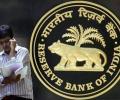
The Reserve Bank has told the International Monetary Fund (IMF) that the objective of frequent interventions in the forex market is to curb excessive volatility, dismissing the Fund's rationale for reclassifying India's exchange rate regime. The IMF, following the Article IV consultation with the Indian authorities, reclassified the status of the exchange rate regime to "stabilised arrangement" from "floating" for period between December 2022 to October 2023. India's Executive Director at IMF K V Subramanian and Senior Advisors Sanjay Kumar Hansda and Anand Singh questioned the selection period adopted by the Fund for analysis and also reclassification of the country's exchange rate regime.

The reserves had touched an all-time high of $367.16 billion previously

Gold, a safe-haven bet, is likely to continue its record-smashing journey in the New Year, rising to Rs 85,000 per 10 grams and even Rs 90,000 level in domestic markets if geopolitical tensions and global economic uncertainties continue.

The gold reserves remained stable at $19.335 billion.

The International Monetary Fund (IMF) warned on Tuesday that India's general government debt (comprising both central and state government debt) could exceed 100 per cent of gross domestic product (GDP) in the medium term. It also cautioned that long-term debt sustainability risks are high due to the significant investment required to meet India's climate change mitigation targets. The Indian government, however, disagreed, arguing that risks from sovereign debt are extremely limited as it is predominantly denominated in domestic currency.

Subramanian, a senior fellow at the Peterson Institute for International Economics in Washington, attended a news conference in New Delhi at which his appointment was announced.

Panagariya, who heads the government's main economic advisory body NITI Aayog, is also India's Group of 20 summit negotiator

Chief Economic Adviser K V Subramanian on Wednesday said India is expected to hit a growth rate of 6.5-7 per cent in 2022-23 and accelerate further to 8 per cent in the subsequent years on the back of reforms undertaken by the government. He also said the government is expected to meet the fiscal deficit target of 6.8 per cent in the current fiscal despite pressure on revenue collections.

Reserves had touched an all-time high of $355.46 billion in the week to June 19.

The International Monetary Fund (IMF) has said India and China will account for half of the global economic growth in 2023, as the multilateral agency retained its growth forecast for Asia's third-largest economy for 2023-24 (FY24). "India remains a bright spot. Together with China, it will account for half of global growth this year, versus just a tenth for the US and euro area combined," the IMF said in its latest update to the biannual World Economic Outlook. Growth in India is set to decline from 6.8 per cent in 2022 (FY23) to 6.1 per cent in 2023 (FY24) before picking up to 6.8 per cent in 2024 (FY25), the global lender said while citing "resilient domestic demand despite external headwinds".

India is poised to be the fastest-growing major economy in the world and an engine of global growth despite global headwinds, says leading industrialist and Aditya Birla Group Chairman Kumar Mangalam Birla. The economic activity in India has witnessed a sharp recovery to pre-pandemic levels on the back of a rapid and widespread rollout of the vaccination programme, Birla said in the latest annual report of UltraTech Cement Ltd. "A strong digital ecosystem, fiscal and monetary policy and various government schemes helped small and medium enterprises and the worst affected sections of the population to survive while reviving demand and bringing the economy back on track," said Birla while addressing UltraTech's shareholders.
Indications are that Reddy will take charge as RBI Governor after the annual meeting of the IMF slated in late September.\n\n
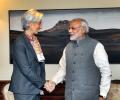
Lagarde had said an Indian could head IMF.

As India's stock rises, the resolution of the border row may become even more difficult, warn Harsh V Pant and Kalpit Mankikar.

Borrowers should consider switching from an MCLR-linked to a repo rate-linked loan.

The International Monetary Fund (IMF) on Tuesday slashed India's growth forecast for 2022-23 (FY23) by 80 basis points to 7.4 per cent, citing less favourable external conditions and rapid policy tightening by the central bank. In its update to the April World Economic Outlook, the IMF said that though a global recession in 2022 was ruled out with a growth estimate of 3.2 per cent, the balance of risks was squarely to the downside, driven by a wide range of factors that could adversely affect the global economic performance. "The risk of recession is particularly prominent in 2023, when in several economies growth is expected to bottom out, household savings accumulated during the pandemic will have declined, and even small shocks could cause economies to stall.

India needs to move towards full capital account convertibility to become a leading global economy.

The SJB has begun to collect signatures from MPs for the no-confidence motion, according to media reports.

The country's foreign exchange reserves declined by $7.541 billion to $572.712 billion in the week ended July 15 as the Reserve Bank continued to intervene in the market to curb the fall of the rupee. In the previous week ended July 8, the reserves shrunk by $8.06 billion to $580.25 billion, the Reserve Bank of India (RBI) data showed on Friday. On Friday, the rupee fell by 5 paise to close at 79.90 against the US dollar.

Rajan, 57, who was RBI governor for three years until September 2016, is currently working as a professor at the prestigious University of Chicago.

A recession is unlikely in the APAC region in the coming year, although the area will face headwinds from higher interest rates and slower global trade growth, Moody's Analytics said on Thursday. In its analysis titled 'APAC Outlook: A Coming Downshift', Moody's said India is headed for slower growth next year more in line with its long-term potential. On the upside, inward investment and productivity gains in technology as well as in agriculture could accelerate growth.

Pakistan has been on the grey list of the Paris-based Financial Action Task Force since June 2018 for failing to check money laundering, leading to terror financing, and was given a plan of action to complete it by October 2019.

Anura Kumara Dissanayake, the leader of the Marxist Janatha Vimukthi Peramuna's (JVP) broader front National People's Power (NPP), on Sunday consolidated his lead in the Sri Lanka's presidential election.

Gold reserves were up by $1.525 billion in the reporting week to $37.625 billion.

Arvind Panagariya, sherpa for India at the summit, tweeted about the "interaction".

India will grow at around 7.4 per cent in 2022-23 and continue at the same pace in the next year as well, Union Finance Minister Nirmala Sitharaman said on Friday. Sitharaman said there are risks on the external front and this is not the right time to throw caution to the wind, and also assured exporters of all the necessary support from the government as they face the headwinds. Speaking at the FE Best Bank Awards event here, Sitharaman said global agencies like IMF and the World Bank have taken cognisance of the strengths of the Indian economy by saying that it will be among the fastest growing ones in the next two years.
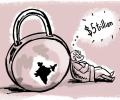
India decisively withstood global headwinds in 2023 and is likely to remain as the world's fastest-growing major economy on the back of growing demand, moderate inflation, stable interest rate regime and robust foreign exchange reserves. Despite widespread pessimism witnessed among the developed nations and the worsening geopolitical situation, India recorded a gross domestic product (GDP) expansion of 6.1 per cent in the March quarter. The growth moved up to 7.8 per cent in the June quarter and was 7.6 per cent in the September quarter. For the first six months of this fiscal, the growth was 7.7 per cent.

India's foreign exchange reserves declined by $685.1 million to $274.81 billion in the week ended August 30 due to a dip in the foreign currency assets, the Reserve Bank said.

Gold reserve also declined by $340 million to $30.55 billion.

India's growth in the last three financial years has averaged just 1.9%. It is natural to project rapid growth from this low base. Crucial to that would be the assumption that the economy has suffered no lasting damage from the pandemic, observes T N Ninan.

The summit is being attended by more than 30 heads of state and top officials from the European Union and invited guest countries and 14 heads of international organisations.
